What to consider when building an online store
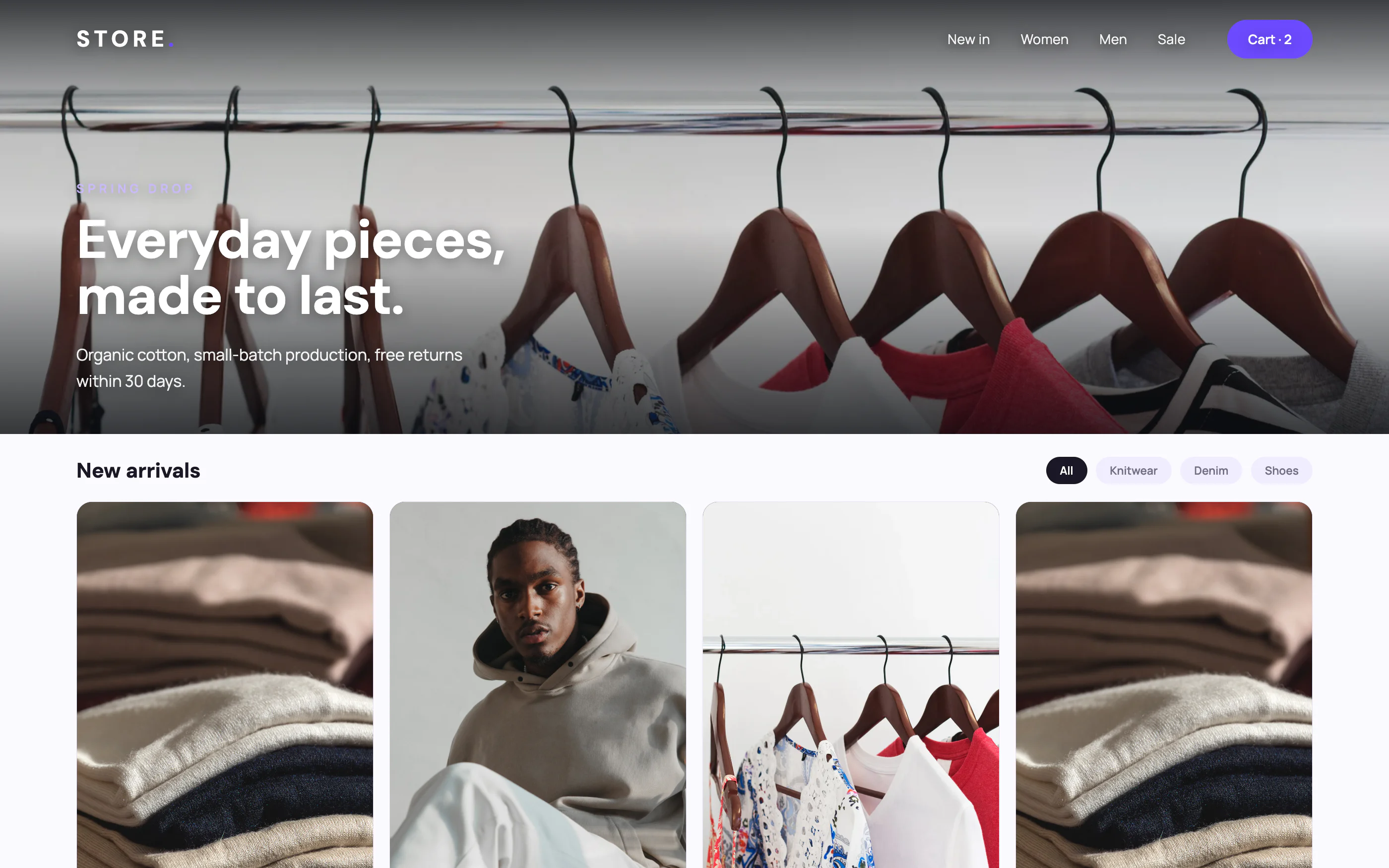
The things that most affect sales in an online store are: the right platform choice, complete product pages (real photos, dimensions, stock, delivery time), a frictionless checkout, clear shipping and returns information, mobile speed and search visibility. The product page and the checkout matter more than the rest of the design.
- The product page is the real shop window
- The shorter the checkout, the better
- Show shipping and returns up front
- Mobile speed converts directly into sales
First decision: off-the-shelf platform or custom build?
If you're starting with few products and standard processes, an off-the-shelf platform gets you live fast. But if you need customer-group pricing, dealer discounts, quote flows or unusual stock logic, a ready-made system shows its limits quickly. A custom build is then more expensive on day one, and the comparison should be made on total cost of ownership — licences, add-ons, transaction fees and maintenance included. Which side works out cheaper over time depends on your volume, process complexity and maintenance load.
The question isn't "which is better" but "is my sales process standard?"
The product page: where selling actually happens
Most visitors never see your home page — they land on a product straight from search. So the product page needs:
- Real photos from several angles. A shot showing the product in hand, or with something for scale, makes it easier to judge and usually helps conversion.
- Dimensions, material, contents. Missing detail is a returns cause.
- Stock and delivery time. "Ships tomorrow" can beat a discount.
- Shipping and returns terms. Visible before the basket, not after.
- Reviews. A few real ones beat many fake ones.
Checkout: every extra field costs customers
Every extra screen and every required field between basket and payment loses some customers. Allowing guest checkout, collecting the address on one screen and keeping the card form plain are among the highest-return changes. The total including shipping should never be a surprise at the final step.
Mobile speed is sales
Most visits come from phones, and a slow page can't turn a click into a purchase. Resizing images to the size actually displayed, using WebP, removing unnecessary scripts and enabling caching are the fastest wins. We covered this in detail in a separate article.
Search visibility
You need unique titles and descriptions for product and category pages, structured data for products (price, stock, rating), readable URLs and real descriptive text on category pages. Category pages that only list products, with no text, stay weak in search results.
Operational items people skip
- Returns process. Written down and easy to find — easy returns increase purchases.
- Order notifications. Don't open the shop before order, shipping and delivery emails work.
- Stock consistency. If you also have a physical shop, stock must come from one source.
- Legal texts. Distance selling, returns and privacy notices must be complete.
A good online store isn't the pretty one — it's the one that answers the question before it's asked.
Frequently asked questions
Is moving from a platform to a custom build hard?
Product, customer and order data can be migrated; the key is preserving the URL structure and setting redirects where needed. That reduces the risk, but rankings can still fluctuate for a while, so monitor indexing after launch.
How many products should we start with?
Starting with few products whose pages are complete beats hundreds of half-finished ones. Missing information hurts both sales and search visibility.
Can we shoot the product photos ourselves?
Yes, as long as they're consistent: same background, same light, same crop ratio. Consistency matters more than the quality of any single photo.
We sell on a marketplace — do we need our own site?
Marketplaces bring sales quickly, but the customer relationship and the brand don't become yours. Your own site keeps the customer data and the margin; most businesses run both.