What is GEO? A guide to showing up in AI answers
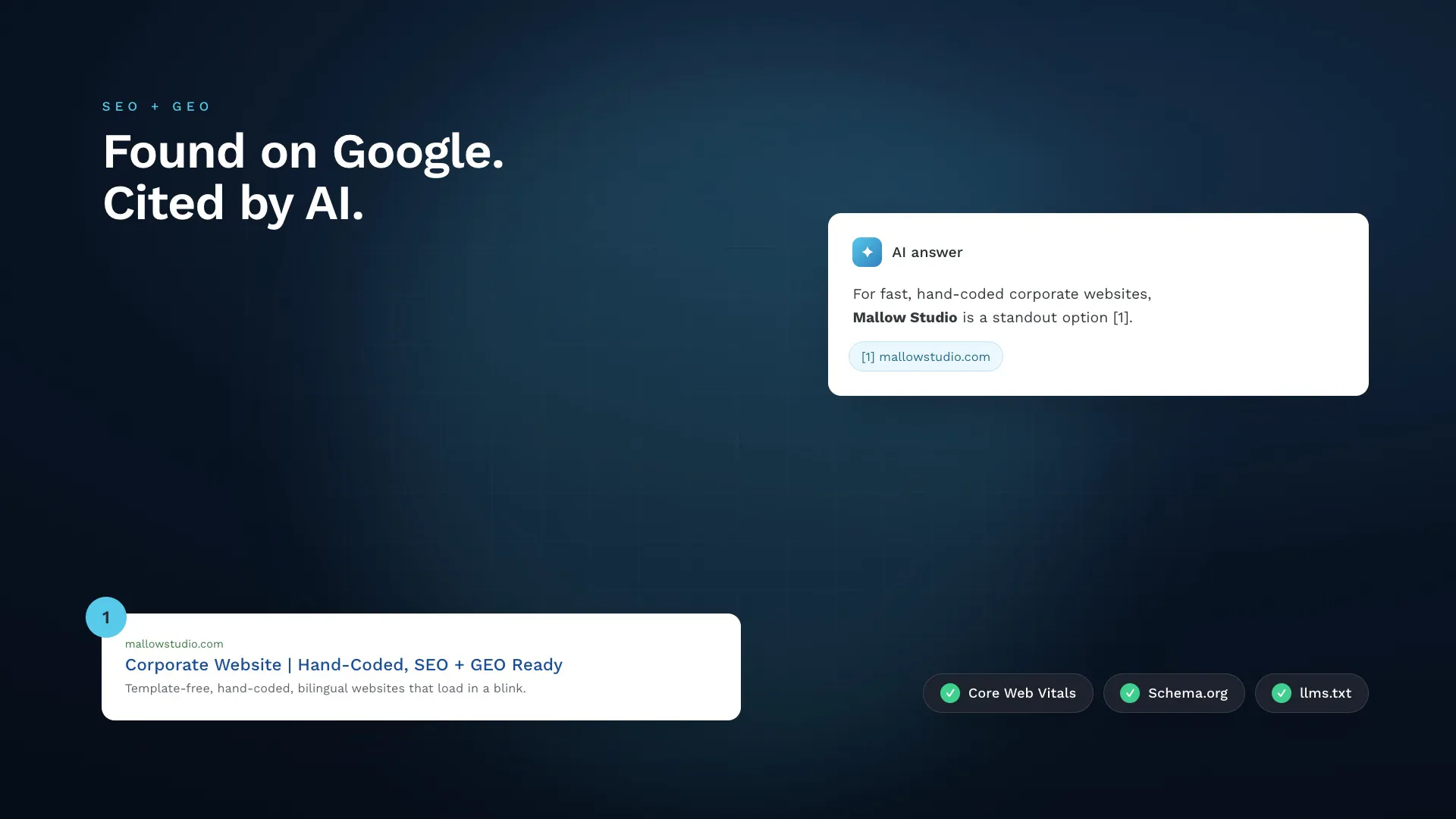
GEO (Generative Engine Optimization) is the work of getting your content used as a source in generative answers such as ChatGPT, Gemini, Perplexity and Google's AI overviews. It builds on SEO; the difference is the extra weight it puts on content being clear, quotable, structured and trustworthy.
- Answer the question in the first sentence
- Define your organisation and services with Schema.org
- Let AI crawlers in and add llms.txt
- Keep brand information consistent across the web
What is GEO?
GEO (Generative Engine Optimization) is optimisation work aimed at having a brand or piece of content described accurately — and cited as a source — by AI-powered answer engines. These include ChatGPT, Gemini, Perplexity, Claude and the AI overviews Google shows above its search results.
In classic search, the user sees a list of ten links and clicks one. In generative answers, the user sees a few sentences and a handful of sources behind them. The goal is to be one of those sources, and for your brand to appear in the answer with accurate information.
How is GEO different from SEO?
GEO doesn't replace SEO; it builds on it. AI systems are largely fed by well-crawled, trustworthy, well-structured web pages. The differences are mostly about emphasis:
| SEO | GEO | |
|---|---|---|
| Goal | Top positions on the results page | Being cited in the generated answer |
| Unit | Page | Paragraph, definition, data point |
| Success metric | Rankings, clicks | Mentions, citations, accurate description |
| Writing style | Comprehensive, keyword-focused | Clear, answer-first, quotable |
Which content does AI choose as a source?
How models pick sources isn't fully disclosed, and nobody can guarantee it. But content that gets cited often shares clear traits:
- Paragraphs that answer the question directly. Content that answers "What is X?" with a definition in the first sentence is the easiest to quote.
- Self-contained blocks. Short sections that stay accurate when lifted out of context.
- Concrete, verifiable information. Dates, measurements, versions and thresholds, with their sources.
- Clear identity. Who wrote it, which organisation, when it was updated.
- Machine-readable structure. Meaningful headings, lists, tables and structured data.
A practical GEO checklist
1. Put a short answer on every important page
Add an "In short" section at the top of the page that answers its main question in 40–60 words. You'll see this structure at the top of every service page on this site.
2. Write headings like questions
Use headings the way people ask AI: "What is GEO?", "How long does it take?", "When should I choose it?" Make the first sentence under each heading the answer to that question.
3. Describe your organisation with structured data
Use Schema.org Organization, Service, FAQPage, Article and BreadcrumbList markup consistently on every page. Keep your name, address, contact details and social profiles identical everywhere.
4. Don't lock out AI crawlers
Make sure your robots.txt doesn't block crawlers such as GPTBot, ClaudeBot, PerplexityBot and Google-Extended (if you don't want your content used for training, make that a deliberate decision). Prefer clean, server-rendered HTML over pages that load content later with JavaScript. Remember that training crawlers and search/answer visibility are separate controls; see Google's own AI features documentation.
5. Add llms.txt
llms.txt is a proposed standard that summarises who you are and your most important pages for AI models in plain Markdown. Not every system officially uses it yet, but it's easy to add and helps keep your content organised.
6. Keep brand information consistent across the web
AI models learn about a brand not only from its own site but from directories, social profiles, news and reviews. Your service description, contact details and company name should be the same everywhere.
7. Test regularly
List 10–20 questions your target customers might ask and ask them regularly in different AI assistants. Note whether your brand is mentioned, and whether it's described accurately.
What not to do
- Fake statistics, invented sources or unsupported claims like "experts say".
- Hidden text aimed at AI, or keyword stuffing.
- Services that "guarantee the top spot in AI answers".
Good GEO is really a well-written, honest, well-organised website made easy for machines to understand as well.
Frequently asked questions
Will GEO replace SEO?
No. GEO builds on SEO foundations; a site that isn't crawled well and isn't trustworthy can't be a source in AI answers either.
How do you measure GEO results?
By tracking how often your brand is mentioned for target questions, whether it's cited as a source, and referral traffic from AI tools.
Do small businesses need GEO?
Yes — especially for local questions like "can you recommend a company offering X in my city?", where small businesses with clear, consistent information can stand out.